


In Part 1 of our series, we grounded ourselves in what the Science of Reading actually is – a body of research, not a program or a script! In Part 2, we explored what that research looks like in action in classrooms, through the five pillars of literacy and the knowledge-building that holds them all together.
But reading development doesn’t pause when the school day ends. Children spend countless hours at home, in the car, at the dinner table, and before bed – and every one of those moments is an opportunity to reinforce what’s happening in the classroom.
Here’s the good news: families don’t need flashcards, worksheets, or a reading curriculum to use at home. What the research actually shows is that some of the most powerful literacy support happens through simple, everyday moments of connection.
Why Home Support Matters
Children’s brains are building language and reading pathways well before — and alongside — formal instruction. The conversations families have, the books they share, and the words children hear all shape the knowledge and language base that comprehension depends on. Research dating back to Hart and Risley’s landmark 1995 study, and confirmed by more recent meta-analyses, has consistently linked the quantity and richness of the language children hear at home to their vocabulary growth. Home doesn’t need to mirror school! it just needs to add rich, low-pressure opportunities for talking, reading, and noticing language together.
Building Knowledge and Language Through Everyday Life
Just as knowledge-building underlies every pillar of literacy in the classroom, it’s also the foundation families are already building at home- often without realizing it.
What this can look like at home:
- Narrating everyday activities (“First we’ll drink some water, then we’ll brush our teeth, and after that we’ll read a book!”)
- Visiting the library, a museum, or even just talking through a grocery trip
- Asking open-ended questions during car rides or mealtime
- Letting kids ask “why” and exploring the answer together
The more children know and talk about, the more they’ll understand when they encounter it in a book. In Shifting the Balance, the popular Science of Reading book series by Jan Burkins, Kari Yates, and Katie Cunningham, one of the central shifts is recognizing that knowledge isn’t just helpful for comprehension – it’s the basis of it. Readers don’t comprehend language in a vacuum. They comprehend by connecting new text to what they already know! That means every conversation, trip, and read-aloud that builds a child’s knowledge of the world is also building their capacity to understand what they read later on.
Playing with Sounds and Letters
Phonological awareness and phonics don’t require formal lessons at home — they can be folded into play.
What this can look like at home:
- Playing rhyming games or silly word swaps (“What if your name started with a B?”)
- Clapping out the syllables in a sibling’s name or a favorite snack
- Pointing out letters and sounds on signs, cereal boxes, or menus
- Letting kids phonetically spell words how they hear them when writing notes or lists (did someone order orinj joos?)
These small moments at home build the same sound-symbol connections being taught explicitly in the classroom.
Reading Together to Support Fluency
Fluency grows through modeling and repetition, and both things happen naturally in a shared reading routine.
What this can look like at home:
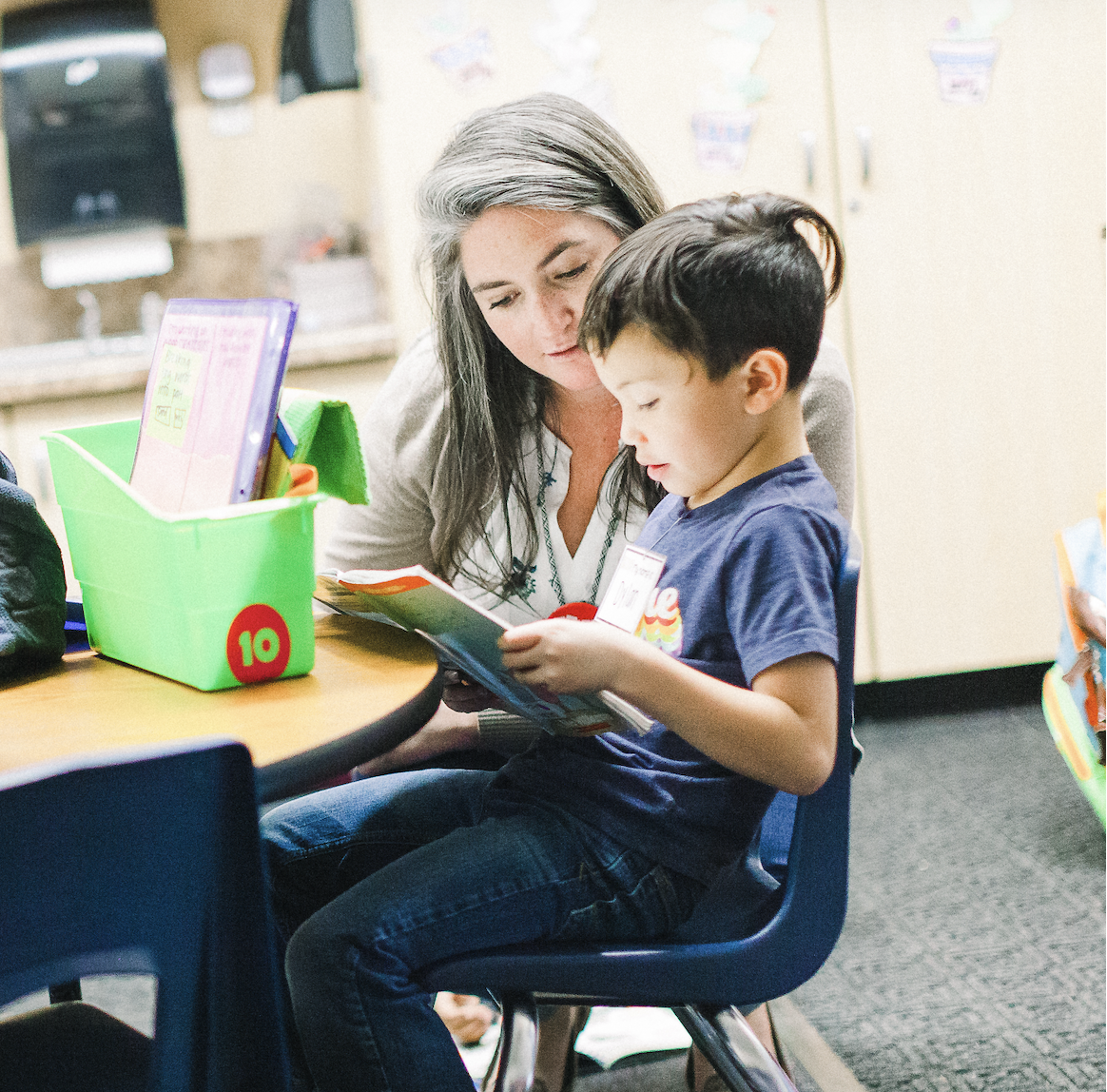
- Reading aloud daily, even to older kids, and reading with expression
- Rereading a favorite book without worrying it’s “too easy” or that you’ve read it “too many times”
- Taking turns reading a page each, or reading along with an audiobook
- Letting kids hear what fluent, expressive reading sounds like
Repetition isn’t a setback – it’s exactly how fluency is built!
Growing Vocabulary Through Conversations
Vocabulary develops largely through the words children hear and use, which makes everyday conversation one of the most powerful (and least structured) tools families have.
What this can look like at home:
- Using a slightly more precise word instead of a simple one (“That’s not just big — it’s enormous!”)
- Reading a variety of books, including nonfiction, on topics kids love
- Talking through new or unfamiliar words instead of skipping past them
- Encouraging kids to use new words themselves, even if they get them slightly wrong at first
Talking About Books to Support Comprehension
Comprehension isn’t a quiz, it’s a conversation. Families can support it simply by talking about what they read together.
What this can look like at home:
- Asking open-ended questions (“Why do you think the author wrote this story? Why do you think that?”)
- Connecting the story to something in the child’s own life
- Wondering aloud about characters’ choices or feelings
- Letting kids retell a story in their own words
There’s no need for a “right” answer here. The goal is thinking and talking about text, not testing it!
Bringing It All Together: Simple Daily Habits
Supporting a student’s reading at home does not require a special program or a perfectly planned routine. Just as the five pillars work together across a school day, they can show up naturally across a home routine too:
- A bedtime story that turns into a few minutes of open-ended conversation
- A car ride filled with questions and noticing words
- A notepad at the kitchen table with a growing grocery list
- A library trip that builds knowledge on a topic your child loves
- A reread of a favorite book that builds fluency and confidence
These moments are small but mighty. They reinforce, rather than duplicate, the explicit instruction happening at school, creating a natural bridge between environments.
Reading is a skill that must be taught, not one that children pick up automatically. This is true at school, and it’s also true at home! The best thing families can offer isn’t a workbook. It’s time, conversation, and a genuine love of books and language. That, combined with strong instruction in the classroom, is what builds confident, capable readers.
📸 How are you bringing the Science of Reading to life in your classroom?
We’d love to see your routines, anchor charts, and student work- tag us @litpartnersca!
Here are some additional resources that can provide support as you dive deeper into the Science of Reading:

Shifting the Balance: 6 Ways to Bring the Science of Reading into the Balanced Literacy Classroom


A Fresh Look at Phonics, Grades K-2: Common Causes of Failure and 7 Ingredients for Success