


3 Planning Decisions that Make Every Read Aloud More Effective
For years, I planned my read alouds the way many teachers do. I picked a book I loved, marked a few pages with sticky notes, asked a handful of questions, and hoped for a rich discussion.
Sometimes this approach worked beautifully. My students clapped, asked to borrow the text, and even continued their conversations about the text into recess. (Yup, I felt like a rockstar.)
Other times, students seemed to enjoy the text, but when it came time to write, discuss, or apply what they had learned, I realized something important: They remembered the book, but they hadn’t necessarily learned the skill.
A well-planned read aloud is SO much more than sharing a great story. It is one of the most powerful opportunities we have to teach comprehension, oral language, vocabulary, critical thinking, and joyful engagement with texts.
And the best part? This is true whether you’re teaching kindergarten or middle school.
At Literacy Partners, we’ve found that the strongest read alouds don’t begin with choosing a book. They begin with intentional planning.
Here are three planning decisions that can transform any interactive read aloud.
When we say Interactive Read Aloud…
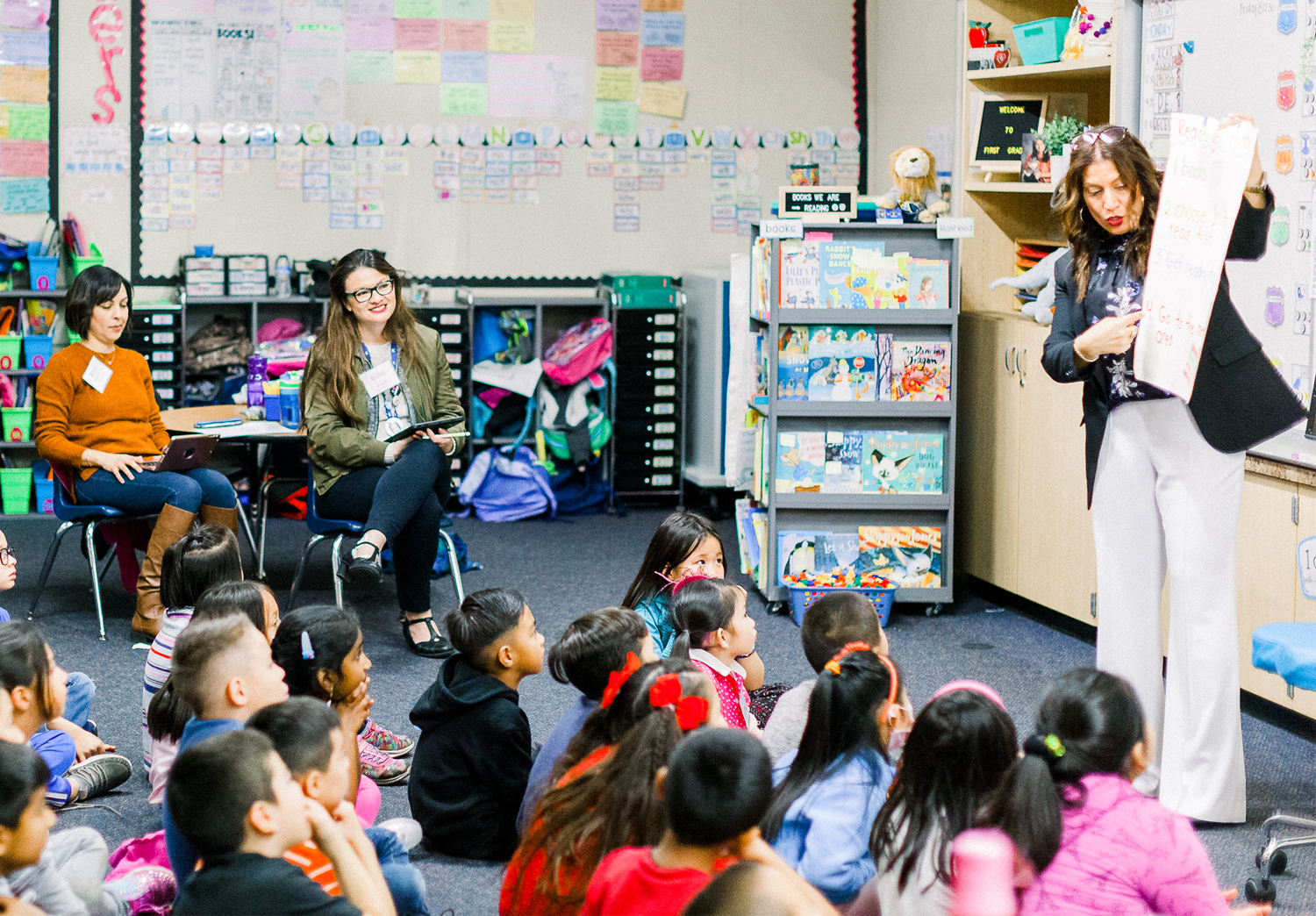
An interactive read aloud isn’t simply reading a book to students. It’s truly purposeful instruction wrapped inside an engaging text.
Students are listening to fluent reading while thinking deeply, discussing ideas with classmates, practicing comprehension strategies, and gradually taking more ownership of their thinking.
Research consistently shows that interactive read alouds strengthen language development, comprehension, academic vocabulary, classroom conversation, and even classroom community (Barrentine, 1996; Rizzuto & Steiner, 2022).
When planned intentionally, read alouds can:
- Expose students to increasingly complex texts
- Build vocabulary naturally
- Develop comprehension strategies
- Create authentic collaborative conversations
- Build empathy
- Inspire real-world connections
- Serve as mentor texts for writing
- Model what skilled readers do while making meaning of text
Planning Decision #1: Start With the Skill—Not the Story
This is probably the biggest planning shift teachers can make. Many of us naturally start by asking: “What book should I read next?”
Instead, here are other questions you can ask yourself: “What do I want students to be able to do by the end of this read aloud?”
- Should students identify character traits?
- Retell a story?
- Determine a central message?
- Analyze how a character changes?
Once you’ve identified the priority skill, finding the right text becomes much easier because you’re choosing a book that allows students to practice that specific thinking.
When teachers start with the skill, every question, discussion, and stopping point becomes more intentional.
Planning Decision #2: Plan for Thinking, Not Just Listening
The magic of a read aloud doesn’t happen because students heard a great text. It happens because students actively think while they’re listening.
Instead of planning a laundry list of comprehension questions, consider where students will actually do the cognitive work.
As you plan, ask yourself:
- Where will I model my own thinking?
- Where will students turn and talk?
- When should students stop and sketch?
- Would a quick jot deepen understanding?
- Is this a moment for students to act something out?
Interactive read alouds should include multiple ways for students to process ideas as they read. Some of our favorite engagement structures include:
- Turn and Talk
- Stop and Jot
- Stop and Sketch
- Stop and Act
- Teacher Think-Alouds
It can be tempting to read straight through a story, but comprehension doesn’t happen simply because students hear the words. It happens when they pause to process what they’ve read. These intentional moments give all learners equitable access to the thinking the text requires.
Planning Decision #3: Plan for Ways to Apply Their Learning
One of the most overlooked planning questions is also one of the most important:
How will students show they learned today’s skill?
Before planning your lesson, decide what your readers’ independent application of the skill will look like. Will students:
- complete a quick sketch?
- write on a sticky note?
- participate in a discussion?
- write a short constructed response?
- compare ideas across multiple texts?
Once you know the final task, you can work backward.
- Now your modeling becomes clearer. Your stopping points become purposeful.
- Your discussions become focused.
- Every part of the lesson prepares students for independent success rather than simply enjoying the story.
Final Thoughts..
When we prioritize a comprehension skill, intentionally plan opportunities for students to think, and design meaningful ways for them to apply their learning, read alouds become much more than ‘story time.’.
Whether you’re teaching kindergarten, 9th grade, or anywhere in between, remember that students become stronger readers by thinking more deeply about the books they hear.