


Reading the Word, Reading the World
Reading the world always precedes reading the word, and reading the word implies continually reading the world.”
-Paulo Freire
Bias Development By Age
- Infants: By three months of age, if not sooner, infants show visual preferences for certain faces based on attraction, gender, and race. National Library of Medicine, PubMed, July 22, 2014
- 2 Years old: “By 2 and 3, children will begin to notice cultural aspects of gender influence. For example, they may take note of the fact that girls tend to play with dolls while boys play with trucks. They may also begin to recognize ethnic differences. noticing that children eat different foods and celebrate different holidays or, conversely, do not celebrate or recognize certain holidays. “Antidelemmatization League, Talking With Young Children About Bias and Prejudice September 01.2014
- 3 Years old: Child weight bias emerges before age 3 years and shows some association with parent weight bias. National Library of Medicine, PubMed, July 22, 2014
- 4 Years old +: “Children as young as 4 years old become aware of their culture’s age stereotypes. From that age onwards they internalize and use these stereotypes to guide their feelings and
behavior towards people of different ages.” World Health Organization, Age and Ageism March 18,2021
“Three- and 4-year-olds begin to expand observations of differences and seek explanations for those differences. They show a greater awareness of their own and others’ appearances. “AntidefAmption League, Talking With Young Children About Bias and Prejudice September 01, 2016
Mirrors & Windows
Rudine Sims Bishop
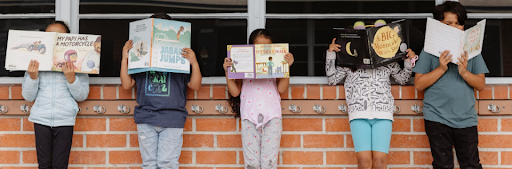
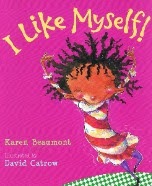
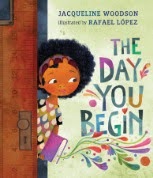
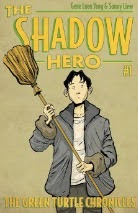
Books That Act as Mirrors
- Helps readers see a reflection of themselves
- Affirms the reader’s identity
- Connects readers to familiar experiences
- Validates the reader’s culture
“When children cannot find themselves reflected in the books they read, or when the images they see are distorted, negative, or laughable, they learn a powerful lesson about how they are devalued in the society of which they are a part.” -Dr. Bishop
Books to explore
Books That Act as Windows
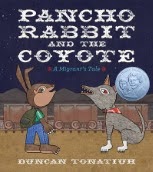
- Helps readers understand others’ experiences
- Connects us to our collective identity
- Build empathy by putting yourself in another’s shoes
- Confront biases through exposure to new ideas
“Books may be one of the few places where children who are socially isolated and insulated from the larger world may meet people unlike themselves.” -Dr. Bishop
Books to explore
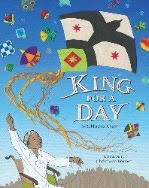
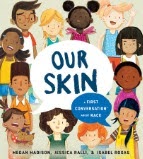
Choosing Texts with Intentionality
Diversity in Children’s Books, 2018
Percentage of books depicting characters from diverse backgrounds, based on the 2018 publishing statistics compiled by the Cooperative Children’s Book Center (CCBC), School of Education, University of Wisconsin-Madison. The CCBC inventory includes 3,134 books published in 2018.
- American Indians / First Nations: 1% (23 books)
- Latinx: 5% (170 books)
- Asian Pacific Islander / Asian Pacific American: 7% (218 books)
- African / African American: 10% (301 books)
- Animals / Other: 27% (864 books)
- White: 50% (1,558 books)
When Choosing Texts, Consider…
- Who are the characters in this book? What is unique about them?
- Will this book act as a mirror or window for my particular readers?
- Are the character’s identity markers being tokenized or just represented as a matter of fact?
- What values, life lessons, and cultural connections can my readers take away from this text?
- What might my readers need more context about before or after reading this text?
- Why am I choosing this text for this particular set of readers? What am I hoping they will gain from reading this text?
Text Connections
- Text-to-Self: “This sounds just like what happened to me!”
- Text-to-Text: “This is just like in the other story when…”
- Text-to-World: “This reminds me of what I heard in the news about…”
Final Thoughts..
- Critical thinker
- Compassionate
- Independent
- Agentive